Multi Nozzle Steam Ejector /
Thermocompressor /
Booster
Multi Nozzle Steam Ejector /
Thermocompresso / Booster
Reliable Vacuum Service for the Process Industries


About
Multi-Nozzle Steam Ejector/Thermocompressor/Booster is a form of heat recovery equipment used to boost low-pressure steam to higher pressures for reuse in additional applications. This equipment maximizes energy efficiency by reclaiming the latent heat energy of a low-pressure steam; compressing the vapor load to meet higher pressure and temperature requirements.
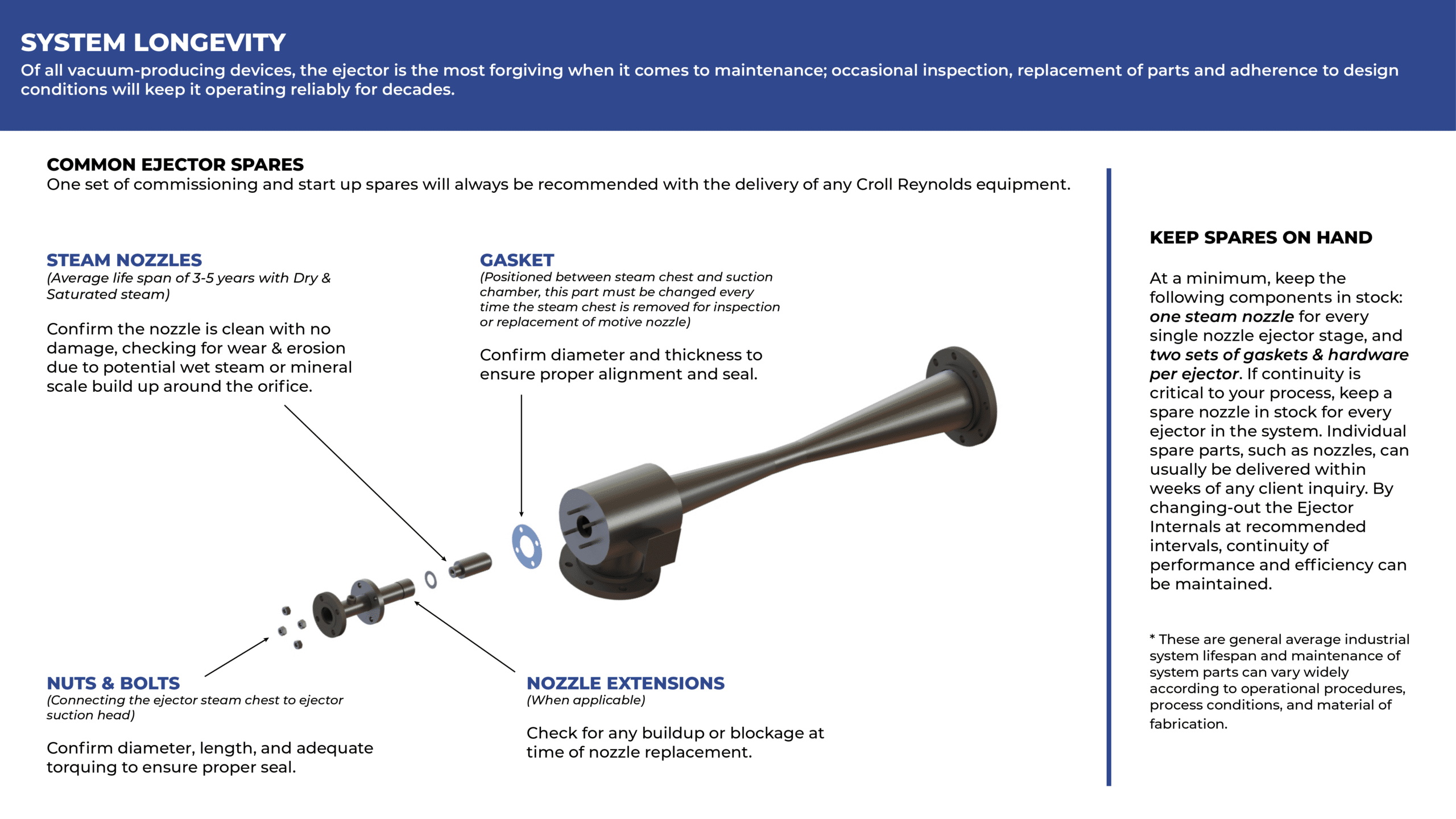
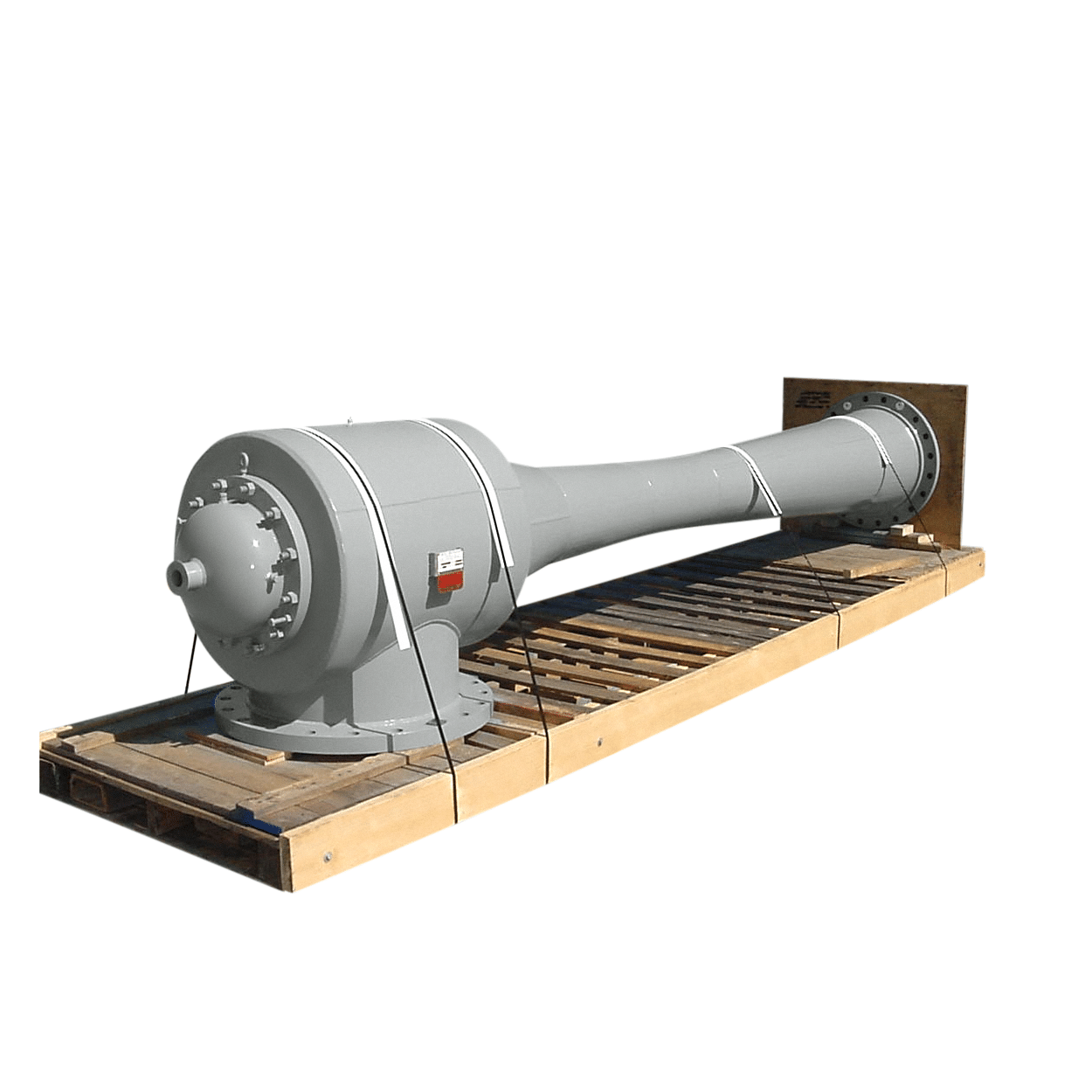
Thermocompressors are generally multi-nozzle steam ejectors. Structurally, they are composed of four major parts (steam chest, motive nozzle(s), nozzle holder(s), and diffuser) and can be designed in single, multiple, or adjustable nozzle configurations. What differentiates thermocompressors from other ejectors is the target application of this equipment. The primary objective of a thermocompressor is to conserve energy within a system by converting “spent” steam into useful steam. Thermocompressors take advantage of low-pressure steam can be utilized as the motive and suction input to reduce resource consumption and support steam supply networks.
Advantages
- Reliable, consistent service and output
- Handles high volumes of gasses and vapors
- Requires no electrical connections or external power (outside of motive steam)
- Low initial cost (compared to mechanical vapor recompressors)
- Higher efficiency in motive steam consumption
- Can operate in very high-temperature applications
- Easy to install and maintain
- Easy to retrofit or upgrade
- Long-lasting and durable equipment
- Can be constructed from variety of steel, alloy, and composite materials
- Single or multi-nozzle design options
- Does not require lubricant, no wear-product interaction
-
No moving parts unless adapted for automatic controls
(spindle design options for turndown)
How it works
Thermocompressors take pressure energy of motive steam and convert it into kinetic energy (high velocity steam), which entrains and then compresses the low pressure spent steam, converting it back to pressure energy. The motive steam is piped into a steam chest and expanded through a converging-diverging nozzle. This high velocity steam entrains the steam entering the low-pressure steam into suction chamber and the mixed process and motive steam are then compressed to an intermediate pressure as they pass through the diffuser (throat). The diffuser acts as a nozzle in reverse, reconverting velocity energy to pressure energy.
The precise dimensions and arrangement of thermocompressors components are expertly engineered to govern velocity/pressure conversions. The diffuser’s geometry moderates the outflow conditions of the mixed stream to the end-state required by the process. Thermocompressors can be designed to achieve specific outlet conditions of mass flow rate and temperature or meet certain suction flow rates with specific suction and discharge pressures.
Use cases
- Chemical –product distillation, drying, flash cooling and more
- Oil and Gas – refinery processes, product distillation and more
- Power Plants – removal of non-condensable gas for turbine efficiency
- Food and Beverage – product crystallization, evaporation and more
- Pulp and Paper – product crystallization, evaporation and more
- Water Treatment and Desalinization – product crystallization, evaporation and more
-
What is a multi-nozzle steam ejector thermocompressor used for?
A multi-nozzle steam ejector thermocompressor is used to recover and recompress low-pressure steam so it can be reused at a higher pressure. This helps improve energy efficiency in processes where waste or low-pressure steam is available.
-
How does a multi-nozzle thermocompressor recover low-pressure steam?
The system uses high-pressure motive steam that expands through specially engineered nozzles to create a high-velocity flow. This flow entrains low-pressure steam, mixes with it, and passes through a diffuser where velocity energy is converted back into pressure energy.
-
Why are multiple nozzles used in a steam thermocompressor?
Multiple nozzles ejector is a Croll Reynolds technology and can provide greater capacity and allow the equipment to handle larger volumes of steam and vapor. The nozzle arrangement is engineered according to the required suction flow, motive-steam conditions, discharge pressure, and process requirements.
-
Can a thermocompressor reduce steam consumption in an industrial process?
Yes. By recovering and recompressing low-pressure or spent steam for reuse, Croll Reynolds’ multi nozzle thermocompressor can reduce the requirement for additional high-pressure steam. The actual savings depend on the process conditions and system configuration anywhere between 5 to 10%.
-
What process conditions are considered when designing a thermocompressor?
Design considerations include motive-steam pressure and temperature, suction pressure, suction flow rate, required discharge pressure, mass flow rate, outlet temperature, and the characteristics of the process vapor. These parameters determine the geometry and configuration of the thermocompressor.
-
What are the advantages of using a thermocompressor instead of a mechanical vapor recompressor?
Croll Reynolds’ Multinozzle Thermocompressors can provide a comparatively simple solution because they have no moving parts and do not require electrical power or lubrication when operated using motive steam. They can also be suitable for high-temperature applications and may have lower initial equipment costs than mechanical vapor recompression systems.
-
Where are multi-nozzle steam ejector thermocompressors commonly applied?
They can be used across process industries including chemical processing, oil and gas, power generation, food and beverage, pulp and paper, and water treatment and desalination. Typical applications include evaporation, distillation, drying, crystallization, and flash cooling.
-
How does the diffuser affect thermocompressor performance?
Answer
The diffuser is a critical component that converts the velocity energy of the mixed motive and suction steam into pressure energy. Its geometry is carefully engineered to achieve the required discharge pressure and flow conditions.
-
Can Croll Reynolds thermocompressors be designed for different process requirements?
Answer
Yes. The equipment can be engineered for specific suction and discharge pressures, flow rates, temperatures, and other process conditions. Croll Reynolds also offers single- and multi-nozzle configurations and spindle designs for applications requiring turndown capability.
-
Can a multi-nozzle thermocompressor be retrofitted into an existing process system?
Yes. Croll Reynolds’ Thermocompressors can be designed for retrofit or upgrade applications. The existing steam conditions, available low-pressure vapor, required discharge conditions, and available installation space need to be evaluated to develop a suitable configuration.