TEMA Type Exchangers
TEMA Shell & Tube Heat Exchangers
Code-Compliant Thermal Solutions for Critical Process Services
TEMA Shell & Tube Heat Exchangers are engineered in accordance with the Tubular Exchanger Manufacturers Association (TEMA) standards to ensure long-term reliability, serviceability, and mechanical integrity. TEMA classifications—TEMA R, B, and C—define mechanical design rigor based on application criticality.
These exchangers are available in a full range of TEMA-configured head types and bundle arrangements, including removable bundles (U-tube, floating head), fixed-tube bundles, falling film evaporator-style exchangers, and kettle-type reboilers commonly used in refinery, chemical, and edible oil industries. Croll Reynolds engineers each exchanger to comply with TEMA and ASME standards while meeting exact process requirements.
TEMA exchangers use a shell-and-tube configuration where one fluid flows through the tubes while another flows across the tube bundle. TEMA standards govern geometry, materials, fabrication tolerances, inspection, and maintenance access. The flexibility of the TEMA system allows application-specific customization based on fluid properties, pressure levels, fouling tendencies, temperature cycling, and maintenance considerations.
TEMA Construction Types Offered
Removable Tube Bundle Exchangers
Ideal for services with fouling or where full bundle access is required.
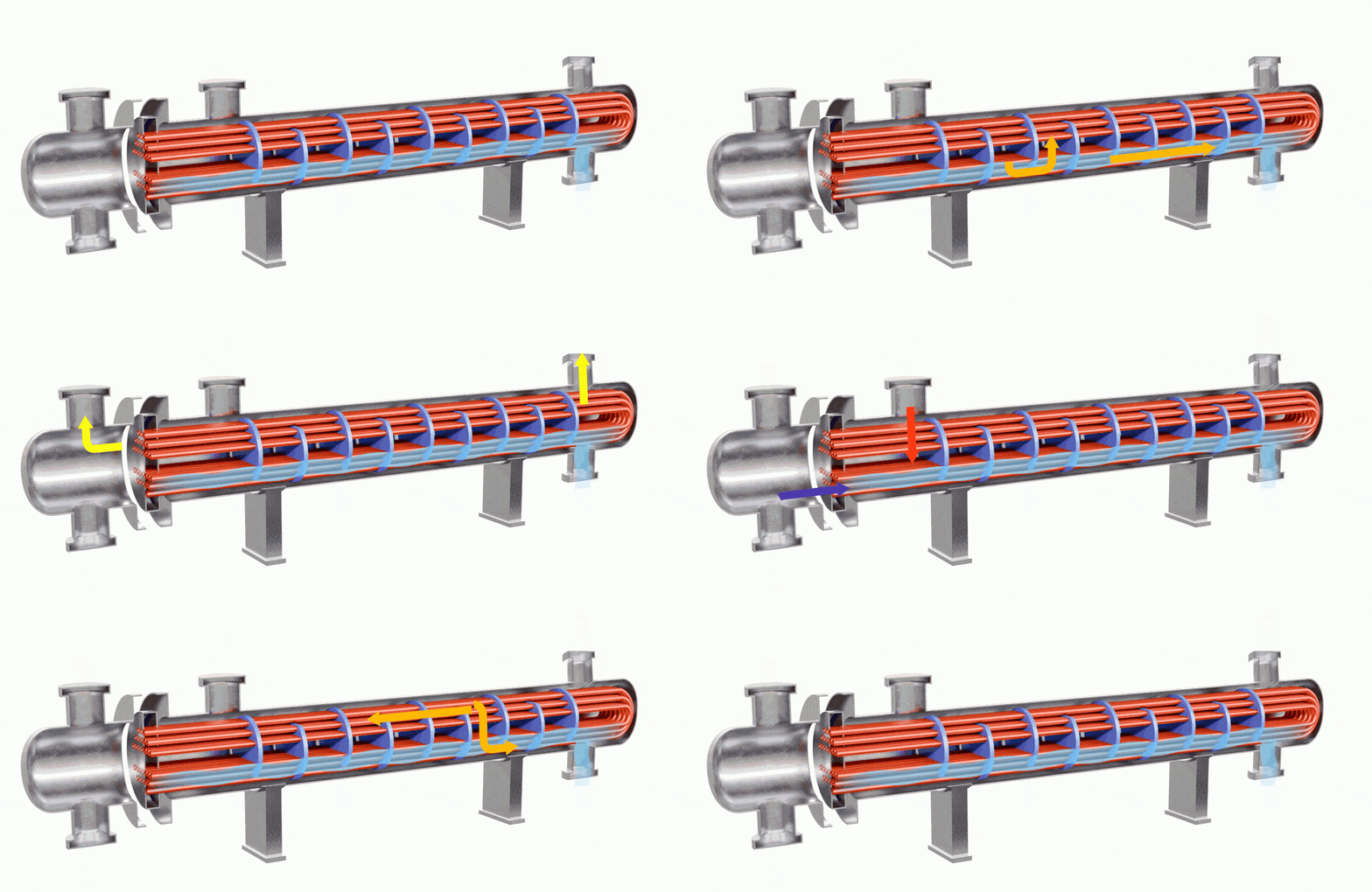
- U-Tube (Type U)
Single tubesheet design, excellent for high thermal expansion. Simplifies mechanical design and reduces cost. - Floating Head (Type S, T, W)
Allows unrestricted thermal expansion. Excellent for high-temperature differences, dirty services, or slurry flows.
Key Features:
- Thermal expansion accommodation between shell and tubes
- Removable tube bundle for mechanical cleaning
- Suitable for fouling services and cyclic operation
Advantages:
- Simplified maintenance and extended equipment life
- Ideal for high-temperature differentials
- Flexible design for varying process conditions
Typical Applications:
- Refinery and petrochemical processes
- Vacuum system condensers
- Chemical processing units
Fixed Tube Sheet Exchangers
Used where tube-side and shell-side conditions are stable and fouling is minimal.
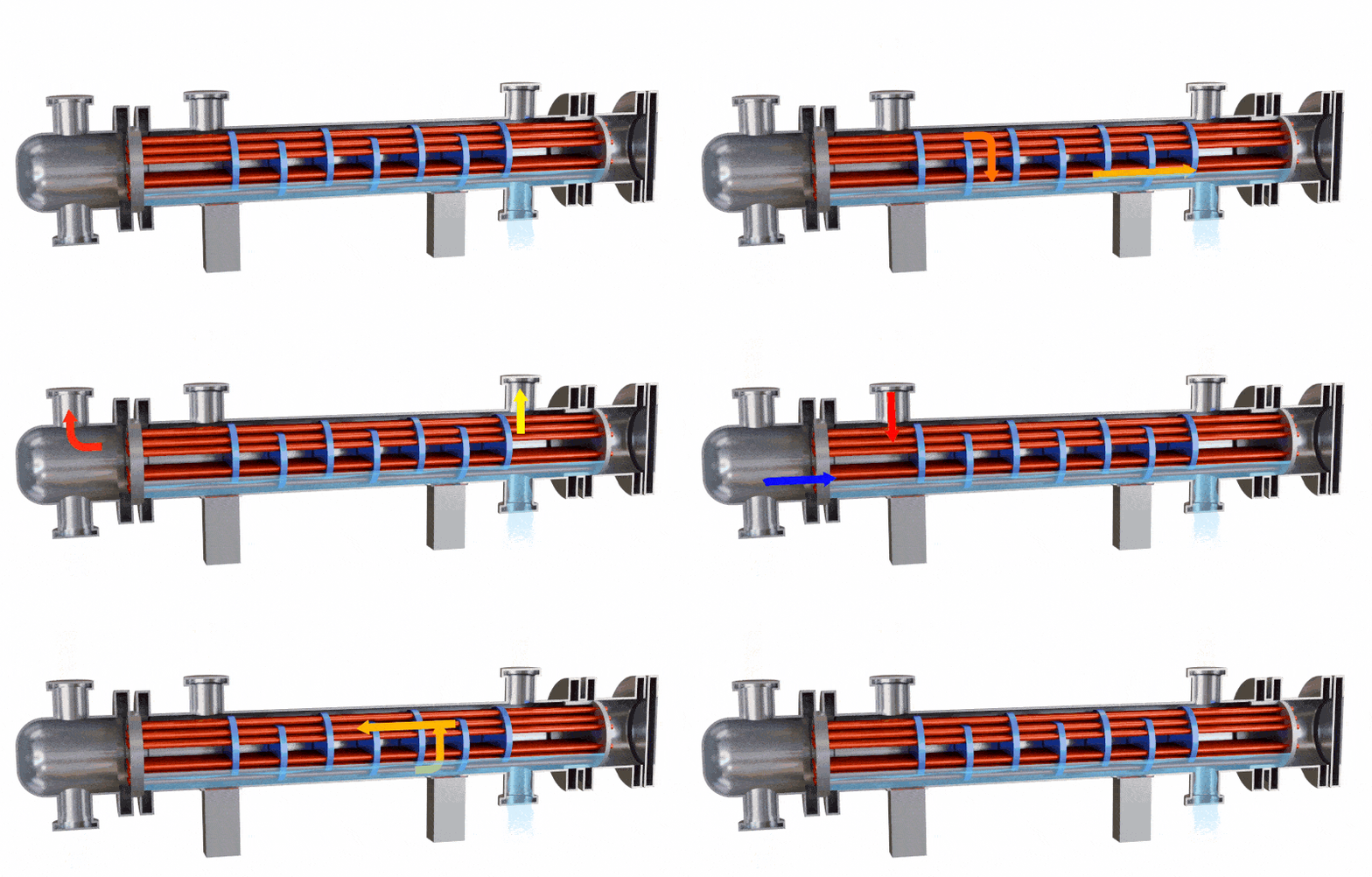
- N-Type Fixed Head
Standard fixed tubesheet design suitable for clean services. - M-Type Stationary Head
Offers robust mechanical integrity for moderate to high pressure.
Key Features:
- Simple construction with lower fabrication cost
- Compact design with fewer mechanical components
- Suitable for clean service fluids
Advantages:
- Economical solution for large heat duties
- Reduced leakage risk due to fewer joints
- High structural integrity
Limitations:
- Limited ability to handle thermal expansion
- More difficult to clean shell side
Typical Applications:
- Cooling water services
- Condensers in stable process environments
- Utility heat exchange systems
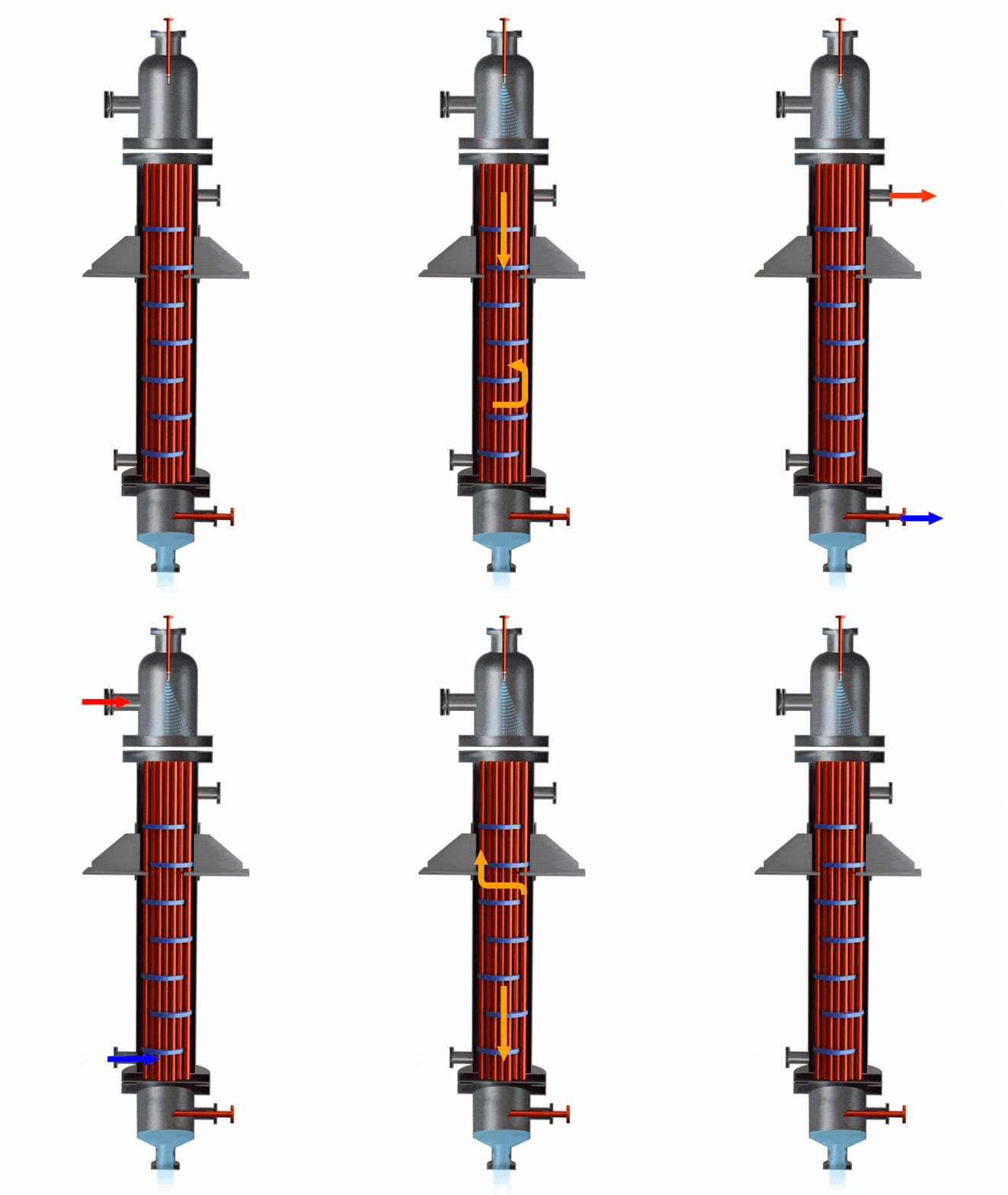
Falling Film Shell & Tube (Spray-Type)
Designed for fatty acid, edible oil, and thermal-sensitive product evaporation.
- Spray nozzle distribution for thin-film formation
- High thermal efficiency with low residence time
- Ideal for deodorization and fatty acid fractionation applications
Key Features:
- Thin film evaporation for high efficiency
- Low residence time
- Suitable for temperature-sensitive fluids
Advantages:
- Reduced fouling and scaling
- Energy-efficient evaporation process
- Ideal for delicate or heat-sensitive products
Typical Applications:
- Edible oil and fatty acid processing
- Pharmaceutical and food industries
- Evaporation systems
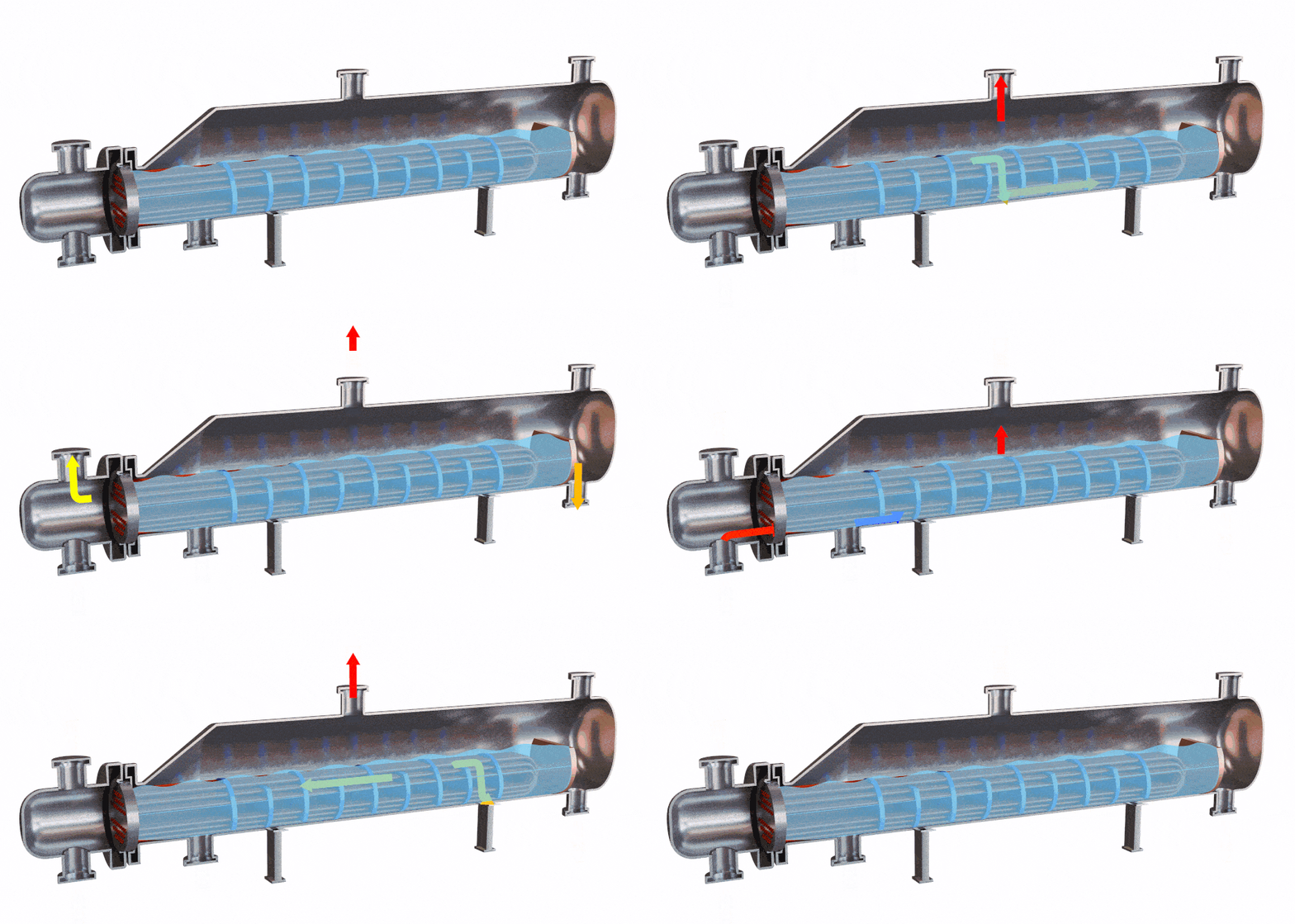
Kettle-Type Reboilers
Commonly used in distillation and refinery service.
- Large vapor disengagement zone
- Excellent for liquid-vapor phase change
- Suitable for reboiling duties requiring stable circulation
Key Features:
- Large vapor disengagement space
- Efficient phase separation
- Designed for boiling and reboiling duties
Advantages:
- Stable operation under varying loads
- Effective for high vapor generation rates
- Widely used in distillation systems
Typical Applications:
- Refinery distillation columns
- Chemical processing plants
- Edible oil refining
Design & Construction Flexibility
Croll Reynolds TEMA type heat exchangers are engineered to meet a wide range of process and mechanical requirements:
- Full range of TEMA configurations (BEM, BEU, AES, etc.)
- Removable and fixed bundle designs
- Custom nozzle orientation and piping integration a Horizontal or vertical configurations
- Carbon steel, stainless steel, and specialty alloys
- Custom nozzle orientation and piping integration
- Designed per client specifications and process requirements
- Available in carbon steel, stainless, duplex, Hastelloy, Titanium, and other exotic alloys
Codes & Standards Compliance:
- TEMA C,B,R / HEI / ASME / API / PED / GB / IBR / Shell DEP / ARAMCO
Certifications Coverage:
- Including all major international certifications (U-Stamp & NBR / CRN / CE-PED / KOSHA / MIGAS / DOSH / GOST-R / MOM / AS1210)
Why Choose Croll Reynolds Non-TEMA Condensers
- 100+ years of engineering expertise in thermal and vacuum systems
- Proven designs across refinery, chemical, and power industries
- Full compliance with HEI, TEMA, API, and ASME standards
- Custom-engineered solutions tailored to process conditions
- In-house testing and quality assurance prior to shipment
- Global project execution with extensive EPC approvals
TEMA Shell & Tube Heat Exchanger
TEMA exchangers are engineered with conservative design margins to handle mechanical stresses caused by differential thermal expansion, vibration, pressure fluctuations, and startup/shutdown cycles.
Tube bundle selection, baffle design, pass arrangement, and nozzle configuration are optimized using recognized thermal design methods and proprietary experience. The result is a heat exchanger that delivers stable performance under real operating conditions while remaining serviceable throughout its lifecycle.
Croll Reynolds integrates TEMA exchangers seamlessly with ejector vacuum systems, surface condensers, and process steam services to provide high-efficiency thermal solutions worldwide.
Use cases
- Chemical – Condensers, reboilers, process heating and cooling
- Oil and Gas / Refining – Product cooling, overhead condensers, vacuum systems
- Power Generation – Steam surface condensers, auxiliary coolers
- Petrochemical – Reactor temperature control and separation services
- Pharmaceutical – Controlled process heating and cooling
- Food & Beverage – Hygienic heating and product thermal conditioning
Frequently Asked Questions
TEMA heat exchangers comply with the mechanical standards of the Tubular Exchanger Manufacturers Association, which standardize nomenclature, tolerances, and minimum construction requirements for shell-and-tube units. Non-TEMA exchangers are custom-engineered where a standardized design is not optimal — compact layouts, unusual thermal duties, or specialty geometries such as hairpin, helical coil, or falling-film. Croll Reynolds designs both, choosing the configuration that best fits the process duty rather than forcing a catalog standard.
TEMA classes define the severity of service a shell-and-tube exchanger is built for: TEMA R is the most rugged, intended for severe refinery and petroleum service with heavier construction and larger corrosion allowances; TEMA B covers chemical process service; and TEMA C covers commercial and general moderate-duty service. Croll Reynolds designs and fabricates all three classes, selecting the class to match process severity and client specification.
Sizing a shell-and-tube heat exchanger means solving for the heat-transfer area that meets the required duty within allowable pressure drop, using flow rates, inlet/outlet temperatures, operating pressures, fluid properties, fouling factors, and material selection. Rigorous thermal-rating software — HTRI Xchanger Suite and Aspen EDR — is the industry standard for this work. Croll Reynolds holds active HTRI membership and sizes every unit from first principles, cross-validated against proprietary in-house tools, so exchangers are neither oversized nor undersized for real process conditions.
Heat exchanger fouling is the buildup of unwanted deposits on heat-transfer surfaces — from scale, corrosion products, biological growth, polymerization, or suspended solids — which reduces thermal performance and raises pressure drop. It is managed through correct velocity selection, appropriate fouling allowances in the thermal design, material choice, and geometries that permit cleaning. Croll Reynolds accounts for service-specific fouling in its HTRI sizing and offers floating-head and removable-bundle designs for high-fouling shell-side duties.
A floating-head heat exchanger has one tubesheet fixed and the other free to move, allowing the tube bundle to expand independently of the shell and to be fully removed for shell-side cleaning. This makes it the preferred choice for high-fouling, high-temperature, or thermally cycling services common in refineries and heavy chemical plants. Croll Reynolds fabricates AES and AET floating-head exchangers to TEMA and client specification.
A U-tube heat exchanger uses tubes bent into a U so the bundle accommodates large thermal expansion with only one tubesheet, making it well suited to high-pressure steam service and applications with large temperature differences such as power-plant condensers. The trade-off is that the U-bends limit mechanical tube-side cleaning. Croll Reynolds designs BEU and AEU U-tube exchangers for high-pressure steam and power-generation duty.
A double tubesheet heat exchanger uses two tubesheets at each tube end with a vented gap between them, so any leak is detected and drained before shell-side and tube-side fluids can mix. This prevents cross-contamination and makes the design standard for pharmaceutical, food, toxic, and reactive-fluid services. Croll Reynolds engineers double tubesheet exchangers where fluid separation is critical.
All condensers are heat exchangers, but not all heat exchangers are condensers: a condenser is a heat exchanger whose specific job is to remove latent heat so a vapor changes phase to liquid, whereas a general heat exchanger may only raise or lower sensible temperature without a phase change. Condensers therefore need vapor-handling and condensate-removal features a sensible-duty exchanger does not. Croll Reynolds engineers both surface and direct-contact condensers as well as full-range process exchangers.
Yes. Croll Reynolds is a U.S.-based designer and manufacturer of TEMA and non-TEMA shell-and-tube heat exchangers, engineering and testing equipment from its New Jersey headquarters since 1917 and building to ASME Section VIII Div. 1 & 2 with U-Stamp and National Board registration. Shell diameters range from 5” to 160” (larger on inquiry) and tube lengths from 4 to 40 ft, in materials from carbon steel through duplex, Hastelloy, titanium, and graphite.